On October 21, we had the opportunity to participate in MapTiler Connect 25 in Zurich. We presented how we use MapTiler’s vector tiles for the base map of the Atlas of Switzerland. Our team member Christian Wohler participated on a panel-discussion on mapping in public administrations. The recording of the panel-discussion can be found on the event’s website.

November 5 marks an important milestone in the recent history of the Atlas: we went online with the new web version. It runs entirely in the browser, requires no local installation, is free of charge, and works on computers, tablets, and smartphones. The new web version is to be understood as a first beta version: it will be continuously expanded and improved. Not all maps are available online yet. Therefore, the existing version 4 “Atlas of Switzerland – online” will remain in operation as a desktop application, where all maps are still accessible.
Shortly after publication, we were able to present the Atlas of Switzerland and the new version at two events.
On November 7 and 8, we were at DialoGéo in Biel. There we presented the Atlas of Switzerland to geography teachers from all over Switzerland. Since the Atlas of Switzerland can also be used as a teaching aid for geography lessons, it was particularly important for us to present it directly to teachers. For those interested, the slides from the presentation are available here.
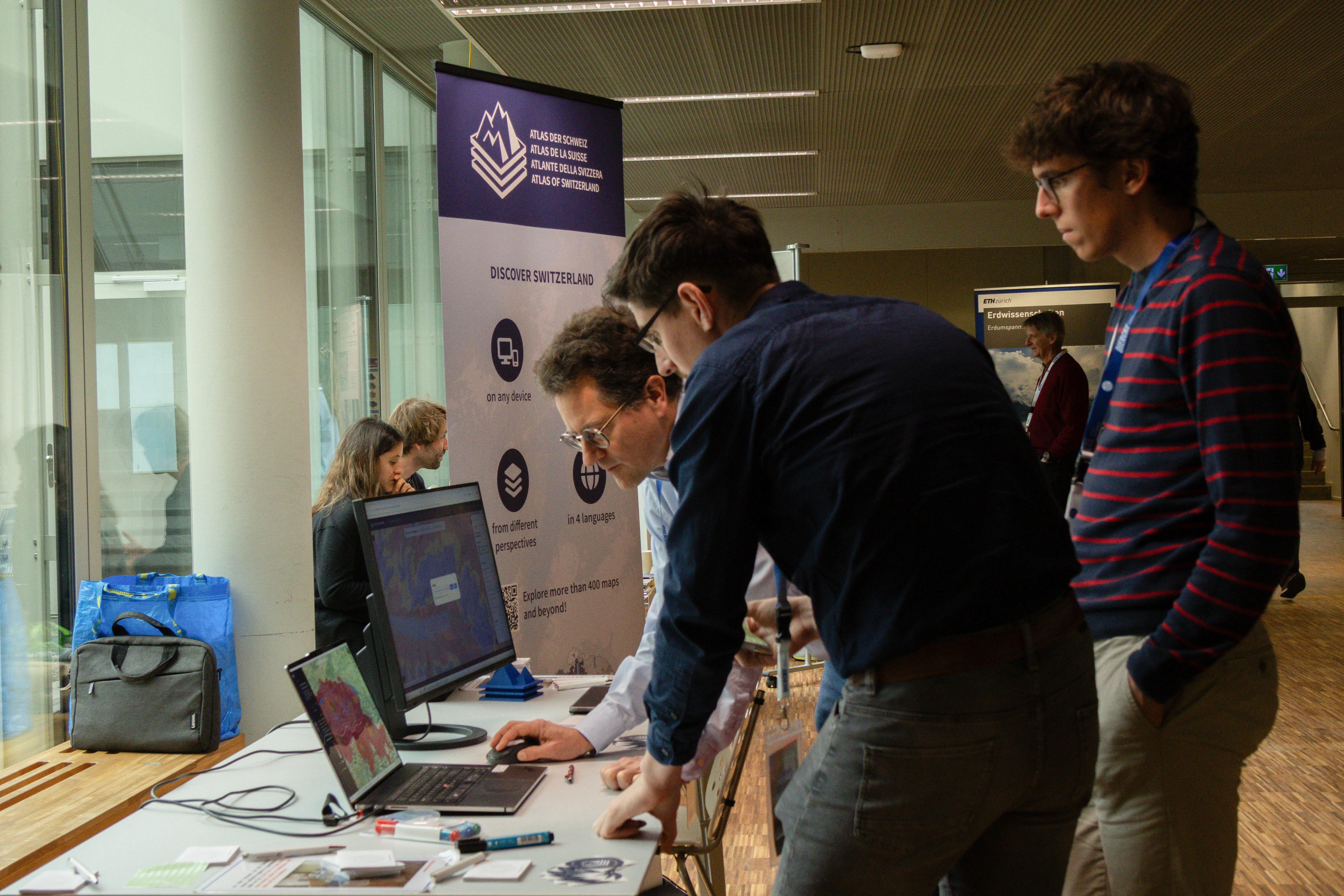
On November 13, we were in Lausanne at the Journée Romande de la Géoinformation. We presented the development of the new web version in a lecture and exchanged ideas with geospatial experts from administration, research, and practice.
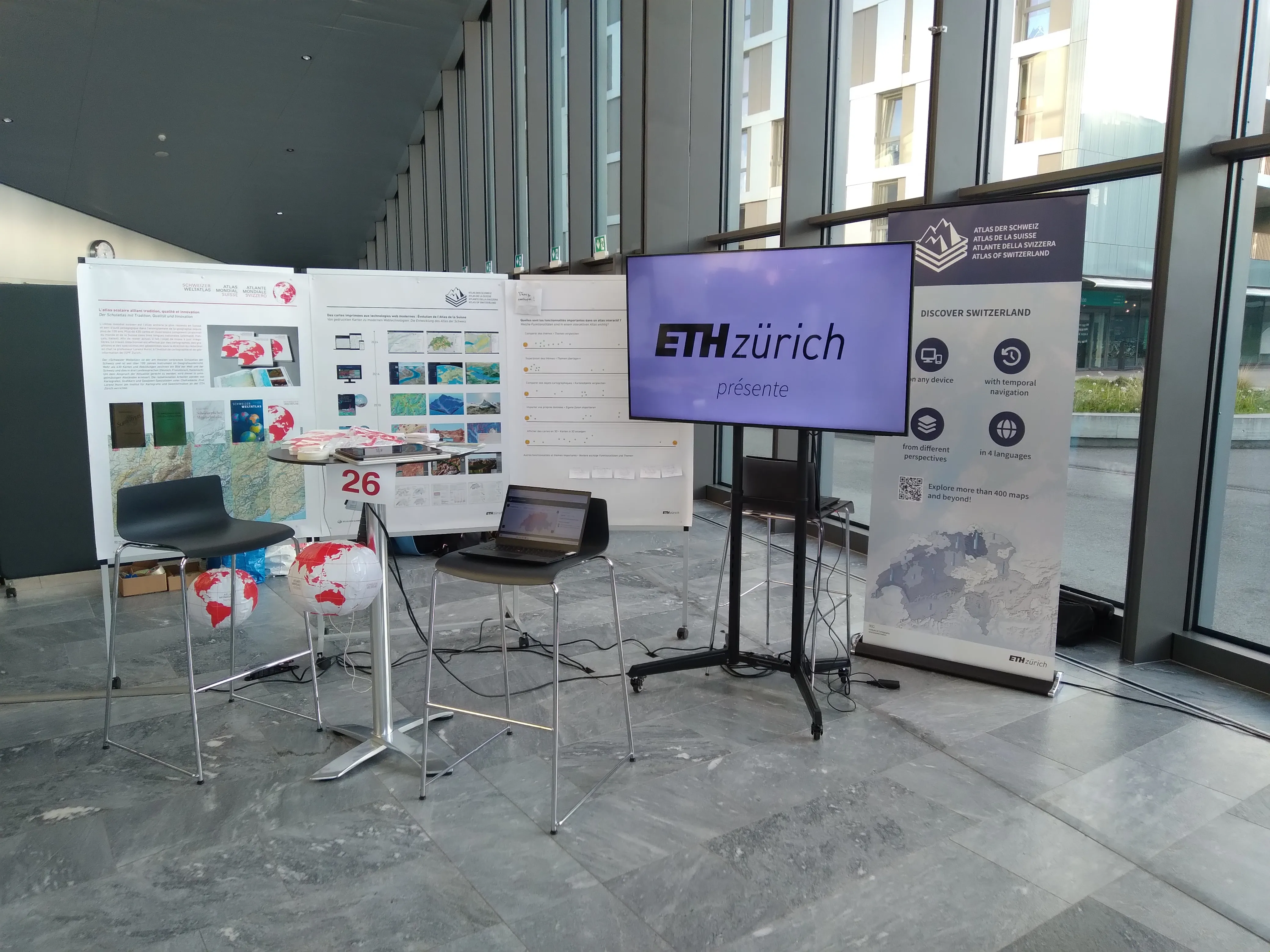
The general feedback on the Atlas and the new version was very positive at both events. We were also able to make new contacts, present the Atlas of Switzerland to a wider audience, and gather valuable feedback. These suggestions for improvements will help us to continuously develop the new web version of the Atlas of Switzerland.
On October 21, we had the opportunity to participate in MapTiler Connect 25 in Zurich. We presented how we use MapTiler’s vector tiles for the base map of the Atlas of Switzerland. Our team member Christian Wohler participated on a panel-discussion on mapping in public administrations. The recording of the panel-discussion can be found on the event’s website.
November 5 marks an important milestone in the recent history of the Atlas: we went online with the new web version. It runs entirely in the browser, requires no local installation, is free of charge, and works on computers, tablets, and smartphones. The new web version is to be understood as a first beta version: it will be continuously expanded and improved. Not all maps are available online yet. Therefore, the existing version 4 “Atlas of Switzerland – online” will remain in operation as a desktop application, where all maps are still accessible.
Shortly after publication, we were able to present the Atlas of Switzerland and the new version at two events.
On November 7 and 8, we were at DialoGéo in Biel. There we presented the Atlas of Switzerland to geography teachers from all over Switzerland. Since the Atlas of Switzerland can also be used as a teaching aid for geography lessons, it was particularly important for us to present it directly to teachers. For those interested, the slides from the presentation are available here.
On November 13, we were in Lausanne at the Journée Romande de la Géoinformation. We presented the development of the new web version in a lecture and exchanged ideas with geospatial experts from administration, research, and practice.
The general feedback on the Atlas and the new version was very positive at both events. We were also able to make new contacts, present the Atlas of Switzerland to a wider audience, and gather valuable feedback. These suggestions for improvements will help us to continuously develop the new web version of the Atlas of Switzerland.